
Home
About us
Contact
Make a request
What we supply
Knowledge base
Google rating: 5.0 from 14 reviews★★★★★
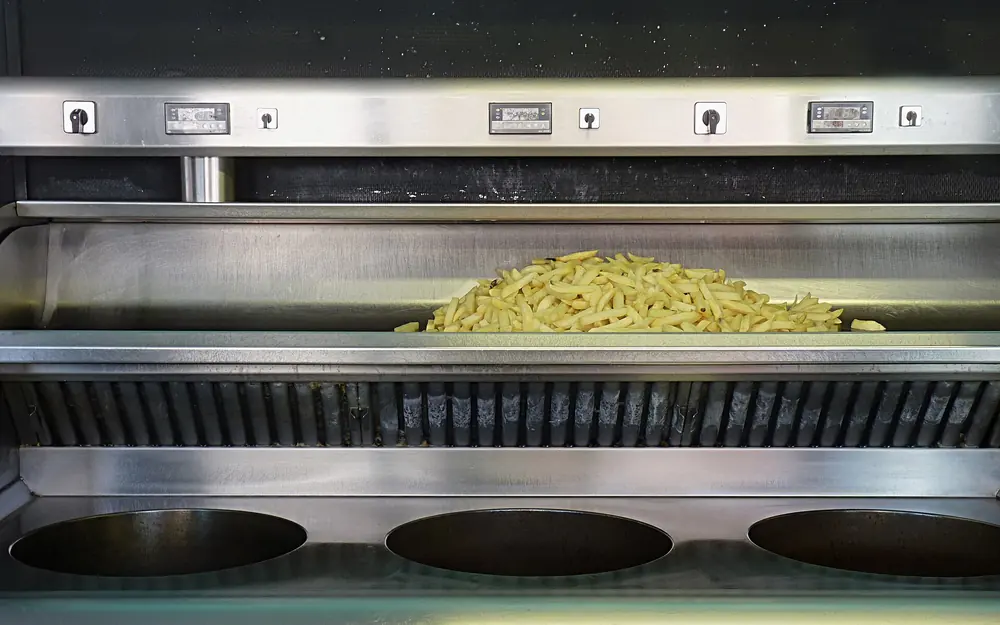
Blanching chips is a term that gets mixed up with pre-frying in kitchens and recipes. For some it means cooking chips briefly in oil, for others cooking them in hot water. Both exist, and they do different things to the potato. This page explains exactly what blanching is, when to blanch in oil or in water, and what that means for fresh chips in a commercial kitchen.
Blanching comes from the French blanchir, to whiten. In the kitchen it is a short preliminary step in which a product is partly cooked without taking on colour. With vegetables this is done in boiling water; with chips it can be done in water or in oil. The aim is always the same: cook the centre in advance, so the final step can stay short.
In Dutch snack bars, blanching in oil is usually just called pre-frying. Strictly speaking, pre-frying is therefore a form of blanching. When you read about blanching in a recipe or trade magazine, check which medium is meant, because the method and the result differ. How pre-frying in the fryer works is covered under pre-frying chips.
Blanching in oil is the usual method in a chip shop. The chips go into the fryer at a moderate temperature, cook through without colouring and then rest until finishing. The big advantage is simplicity: you use the same fryer for both stages and no water is involved. The chips come out of the basket dry and can go straight onto the rack or into the cold room.
The drawback is that the chips already absorb fat at this stage, and the fat is put under extra strain by starch and moisture from the fresh cut. If you cut your own, rinse the chips and let them drain well before they go into the fat. Exact temperatures and times can be found under pre-frying chips: temperature and time.
When blanching in water, the cut chips go into hot water just below boiling point until they are cooked but still firm. The water rinses sugars and loose starch from the surface. That gives a more even colour when frying and helps limit the formation of acrylamide. Many chefs also find it gives a softer, creamier centre.
There are drawbacks. After the water the chips are fragile and must dry and cool completely before they go into the fat; wet chips in hot oil spit and cool the fryer down. After that there is still a frying stage in oil, followed by finishing. So it is three stages instead of two, with extra space, pans and time. That is common in industry, but not in most snack bar kitchens.
For most snack bars and chip shops, blanching in oil is the logical choice. It fits the existing way of working, it is quick and the result is predictable. Blanching in water can be of interest to a restaurant that serves chips as a side dish with extra care, or to anyone working with a potato that is naturally high in sugar.
With a good chipping potato that last point matters less. Agria is known for its high dry matter and low sugar content, and is grown and stored by the Van Beusichem family itself. The fresh chips reach you without additives and not pre-fried, so you choose how to blanch them. Also read frying chips twice, or ask Thijs on 06 23972300 for advice on your method.
Pre-frying is blanching in oil. Blanching can also be done in water, in which case a frying stage in oil follows.
Until the chips are cooked but not yet falling apart. That varies with thickness and variety; test with the tip of a knife. Then let them dry completely.
Because there is still water on the chips. It evaporates violently in the hot fat. Let the chips drain, dry and cool properly.
Yes, like all fresh chips. They are supplied not pre-fried, so you fry them yourself in two stages. For most snack bars, blanching in oil is the most practical route.
Call or message Thijs or Joost, or compose your request in a minute. You will hear from us soon.
Make a request Get in touchCall or message Thijs on +31 6 23972300 or Joost on +31 6 23055742, or send an enquiry straight away. We are happy to think along with you.
Make a request Call Thijs: +31 6 23972300