
Home
About us
Contact
Make a request
What we supply
Knowledge base
Google rating: 5.0 from 14 reviews★★★★★
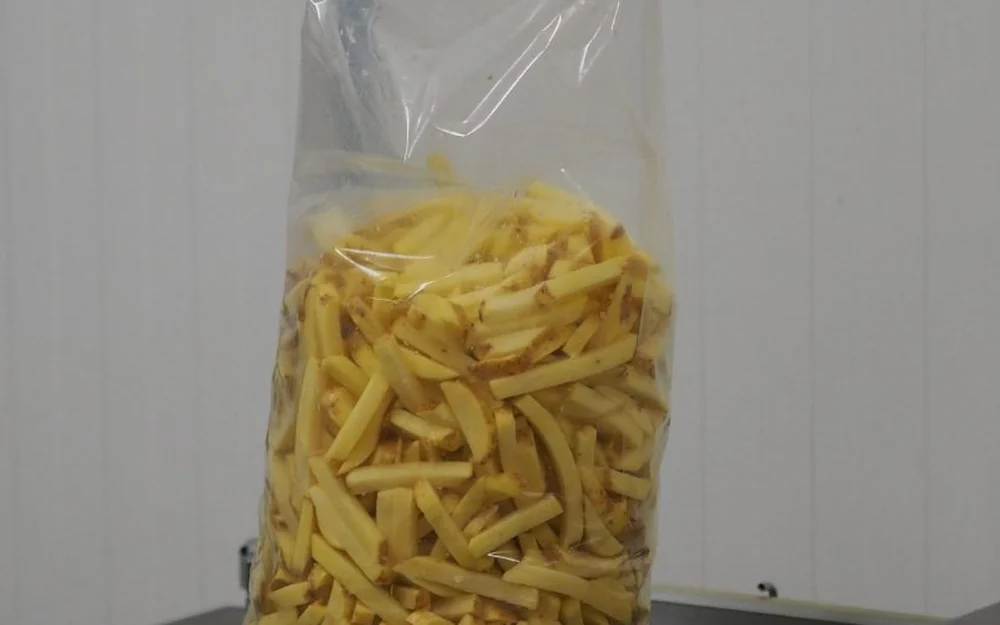
Acrylamide in chips is something every chip fryer has to deal with, whether they know it or not. Since April 2018 EU Regulation 2017/2158 has applied, and it also covers chip shops, restaurants and other catering businesses that fry chips. The aim is to keep acrylamide in food as low as reasonably achievable. Below you can read in plain language what acrylamide is and what measures the regulation asks of your kitchen.
Acrylamide is a substance that forms naturally when starchy foods such as potatoes are baked, fried or roasted at high temperatures. It forms from natural sugars and an amino acid in the potato, in the same reaction that produces the brown colour and fried flavour. The darker the chip, the more acrylamide it usually contains.
In 2015 the European Food Safety Authority, EFSA, concluded that acrylamide potentially increases the risk of cancer. That is why rules were introduced. For ready-to-eat chips the regulation sets a benchmark level of 500 micrograms per kilo. That is not a legal maximum, but a yardstick to check whether the measures taken are working.
The regulation asks you to use potato varieties with a low sugar content. Fewer sugars mean less raw material for acrylamide, and chips that are less likely to colour too dark. That is why Agria has a good name in the chip kitchen. More about the variety is on the page about our Agria potatoes.
How whole potatoes are stored matters at least as much. At too low a temperature the potato turns starch into sugars, and in the fryer those sugars become acrylamide. So whole potatoes do not belong in the cold store. As a guide, keep them above 6 degrees Celsius, cool, dark and frost-free. See also storing potatoes. If you cut your own, it helps to rinse or briefly soak the cut chips so sugars are washed off the surface. A related technique is blanching chips.
The best-known rule: do not fry chips hotter than 175 degrees Celsius. Above that temperature acrylamide formation rises quickly. Fry the chips to golden yellow, not to brown. The regulation also asks for a colour guide showing what the chips should look like, and it is best hung visibly by the fryer, so everyone who fries has the same picture in mind.
The quality of the frying fat also counts. Keep it clean, skim out crumbs and burnt bits and change it in good time. When that moment has come is explained under changing frying fat. Also, do not fry longer than necessary: if you fry fresh chips neatly in two stages, the finishing fry needs only a short time for a golden crust.
For a chip shop or restaurant it comes down to a fixed routine everyone in the kitchen knows. Set the fryer to a maximum of 175 degrees Celsius, hang up the colour guide, teach new staff what golden yellow looks like and record how you store potatoes and chips. The Dutch food authority, the NVWA, can check whether you apply these measures.
We are happy to help with that. Our chips are cut from Agria and, for just a few weeks in August, from Frieslander, both from our own fields. We also help with oil, temperature and routine, so the chips come out of the fryer golden and crisp. More about that support is under advice on frying chips, or call or message Thijs on 06 23972300.
Yes. The regulation applies to every business that fries chips and sells them to consumers, so chip shops, cafeterias, restaurants and food trucks too.
Above that temperature acrylamide formation rises quickly. Frying at no more than 175 degrees Celsius keeps the chips golden and the level lower.
No. It is a benchmark for judging whether the measures work. The obligation lies in applying the measures themselves.
Preferably not. Storing them too cold raises the sugar content, which means more acrylamide and darker chips. Keep them cool and dark, above 6 degrees Celsius.
Call or message Thijs or Joost, or compose your request in a minute. You will hear from us soon.
Make a request Get in touchCall or message Thijs on +31 6 23972300 or Joost on +31 6 23055742, or send an enquiry straight away. We are happy to think along with you.
Make a request Call Thijs: +31 6 23972300