
Home
About us
Contact
Make a request
What we supply
Knowledge base
Google rating: 5.0 from 14 reviews★★★★★
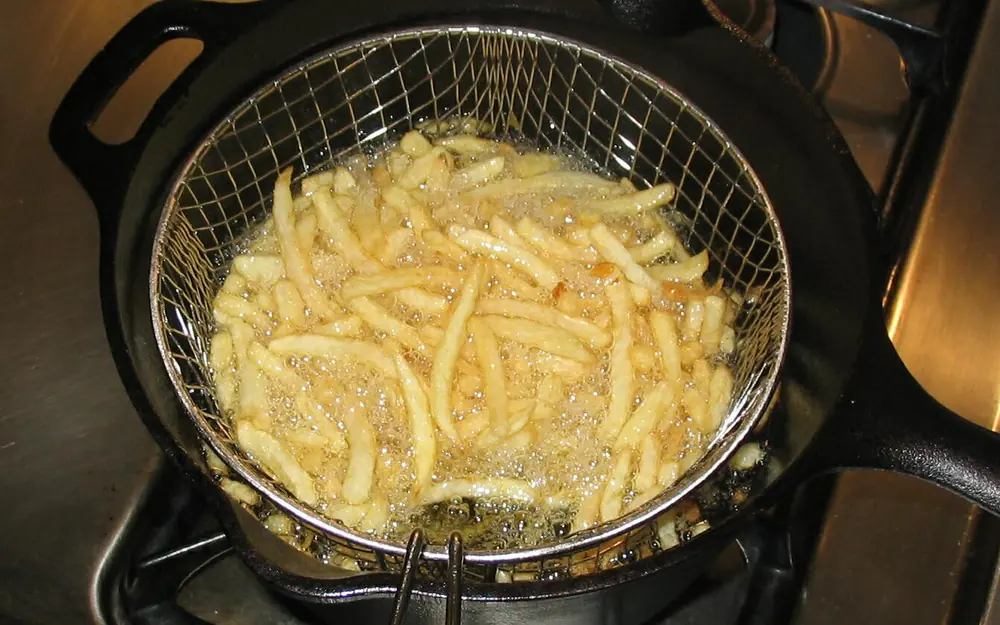
Changing the frying fat is part of the routine in every chip shop, but when the moment comes differs from kitchen to kitchen. It depends on what you fry, how much you fry and how you look after the fat in between. Wait too long and you taste it in the chips; change too early and you are throwing money away. This page explains how to change frying oil in a catering kitchen at the right moment and how to keep the fat in good condition for as long as possible in between.
Your eyes, nose and tongue are the first measuring tools. Watch the colour: fresh fat is light and clear, spent fat turns dark and cloudy. Watch for smoke: if the fat already smokes at your normal frying temperature, its smoke point has dropped. Watch for foam: a layer of foam that stays and does not subside is a clear signal. And trust your nose: fat that smells sharp, rancid or musty should come out.
The chips tell you too. If they brown faster than usual without crisping, taste bitter or leave a greasy aftertaste, the fat is finished. Spent fat also becomes more syrupy and clings to the chips for longer. A frying oil tester gives an objective reading of how far the fat has broken down, which is useful when several people work the fryer.
Filtering is the cheapest way to make the fat last longer. Crumbs and loose bits of chip burn in the fat and speed up its breakdown. Skim them out regularly during service and filter the fat at the end of the day, while it is still warm and liquid but no longer hot. Clean the tank at the same time so that old residue does not end up in the filtered fat. Record when you filter and change; that belongs in your HACCP records.
After filtering, top up with fresh fat to the correct level. The fresh fat dilutes the old and keeps the quality up for longer, but it cannot rescue fat that is already spent. Once the fat is finished, change all of it in one go and do not mix old with new.
Temperature is the biggest factor. During quiet hours turn the fryer down or to standby instead of leaving it at full heat. Do not fry hotter than necessary; for finishing, 175°C is the maximum, partly because of acrylamide. Cover the tank when it is not in use so that light and air have less effect on the fat.
Never sprinkle salt or seasoning over the fryer; salt speeds up the breakdown of fat. Let chips drain well before they go into the fat and do not fry wet products. Breaded snacks leave more crumbs behind than chips; if you have the space, keep a separate tank for chips. Which fat stays stable the longest is covered under the best frying fat and beef dripping or vegetable frying fat.
Store new frying fat somewhere cool, dry and dark, in its sealed original packaging. Light, heat and air age fat even inside the pack. Work in order of arrival so that no old stock is left at the back.
Used frying fat never goes down the sink or the drain. It solidifies in the pipes and causes blockages. Have it collected in sealed containers by an approved collector, who will make sure it is processed, for example into biofuel. Ask your fat supplier or local council which collectors operate in your area.
How chips and fat perform together also depends on the potato. Friet van Beus helps with choosing an oil or frying fat and with the way you work in your kitchen. Call or message Thijs on 06 23972300, or read more about advice on frying chips.
That differs per business. It depends on what and how much you fry, the type of fat and how well you filter. Look at the colour, smoke, foam, smell and the chips themselves, or measure with a frying oil tester.
Topping up after filtering is fine. Once the fat is spent, change all of it; fresh fat does not make broken-down fat good again.
Have it collected by an approved collector. Never pour it down the sink and never put it in general waste.
Fresh chips bring starch and moisture with them. Let the chips drain well and skim out crumbs as you go; then your fat stays good for longer.
Call or message Thijs or Joost, or compose your request in a minute. You will hear from us soon.
Make a request Get in touchCall or message Thijs on +31 6 23972300 or Joost on +31 6 23055742, or send an enquiry straight away. We are happy to think along with you.
Make a request Call Thijs: +31 6 23972300