
Home
About us
Contact
Make a request
What we supply
Knowledge base
Google rating: 5.0 from 14 reviews★★★★★
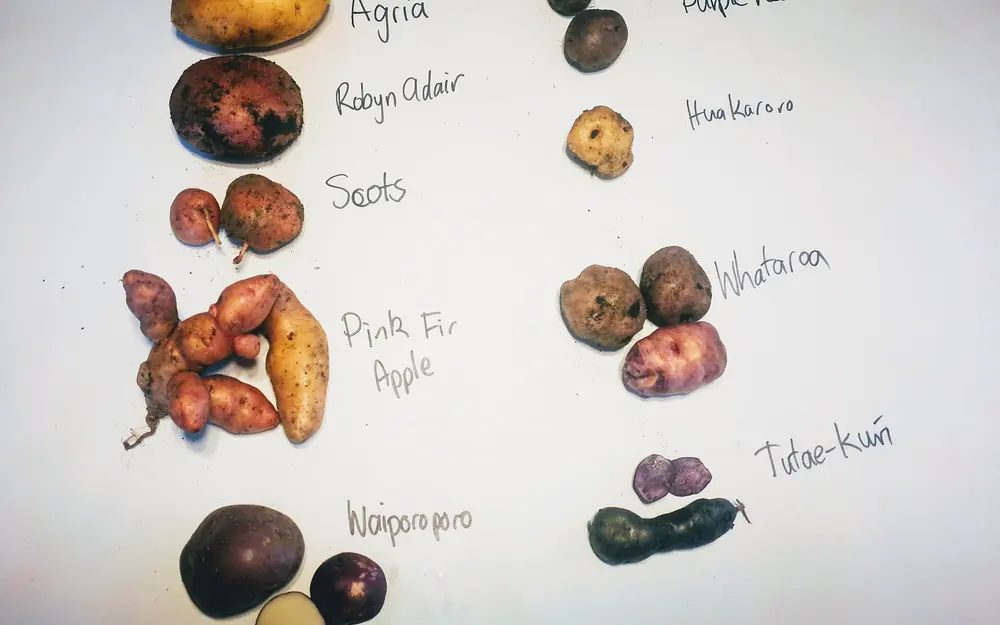
Which potato you choose for chips largely decides whether your customers come back. Not every potato gives a crisp, golden chip with a fluffy centre. The difference lies in three things you cannot see from the outside: the dry matter content, the amount of starch and the sugar content. We have grown potatoes on our farm in Zeewolde since 1994 and have been cutting fresh chips for snack bars, chip shops and restaurants since 2016. In this article we explain what to look for, which chipping potatoes are suitable and why we choose Agria and Frieslander ourselves.
A chipping potato is a different product from the potato that ends up in a mash at home. For chips you want a potato that is high in dry matter, floury, low in sugar and large and elongated in shape. That combination gives a chip that holds together in the basket, does not colour too quickly and is crisp after the final fry. A potato that falls short on any of these points shows up straight away in the kitchen: chips that go limp, colour too dark or soak up a lot of fat.
When buying potatoes for chips, shape and size are often overlooked, but for a business they matter a great deal. A large, elongated tuber gives you long chips with few offcuts and small pieces. Small or round potatoes give more short chips and more cutting loss. If you process many kilos a week, you notice the difference in yield and in how the chips look on the plate.
A potato consists mostly of water. What remains once you take that water away is called dry matter, and most of it is starch. For chips you want a potato with a high dry matter content, roughly 20 to 24 per cent. The more dry matter, the less water has to evaporate in the fryer. The result is a chip that forms a crisp crust faster, absorbs less fat and stays dry and fluffy inside.
Potatoes rich in starch are floury: as they cook, the cells separate slightly and the inside becomes soft and crumbly. That is exactly what you taste in a good chip. A waxy potato has less dry matter and more water. Make chips from it and the inside stays glassy while the outside stays soft. To understand the difference between the types better, read our piece on floury potatoes and the article on waxy potatoes.
In the potato trade, dry matter is often measured through the underwater weight: a weighed quantity of potatoes is weighed again under water. The heavier the potatoes are under water, the more dry matter they contain. The content varies not only by variety but also by field, by season and with the weather. A dry summer produces different potatoes from a wet one. That is why a regular grower with a fixed variety is worth so much if you want to serve the same chips every day.
The second criterion is sugar. Potatoes naturally contain small amounts of sugars such as glucose and fructose. In hot fat these sugars react with proteins and colour the chip. This is known as the Maillard reaction. A little of it gives the attractive golden colour and the flavour. Too much sugar gives chips that are already brown before they are cooked and crisp, often with dark tips or streaks and a bitter aftertaste.
Sugar content depends on the variety, but also on ripeness and on how the potatoes are stored. Immature potatoes, lifted early in the season, contain more sugar. Potatoes stored too cold, roughly below 6°C, convert starch into sugar. Growers call this cold sweetening, and you see it straight away in the fryer. Dark chips are undesirable for another reason too: frying sugar rich potatoes produces more acrylamide. Good chipping potatoes are therefore naturally low in sugar and are stored cool, but not cold.
Agria is the benchmark for many chip fryers. It is a variety of German origin with large, elongated tubers, yellow flesh and a high dry matter content. Agria is floury, gives golden chips with a full flavour and stores well, which makes it usable for a large part of the year. Frieslander is an early Dutch variety with white-yellow flesh. Because it ripens earlier in the season, it is already suitable for chips in late summer, at a time when late varieties are not yet ready.
Bintje is the classic Dutch variety, known for more than a hundred years and for a long time the standard for chips in the Netherlands and Belgium. It is floury and makes tasty chips, but the variety is susceptible to disease and is grown less as a result. You can read more on our page about Bintje potatoes.
Bildtstar is a floury variety from Friesland that is also used for chips and mash; see Bildtstar potatoes. Finally, Innovator is a variety processed mainly by the chip industry. It produces long tubers with plenty of dry matter and is popular for frozen chips, but you come across it less often on the open market. A complete overview, including varieties for boiling and salads, can be found under potato varieties.
On our farm in Zeewolde we grow the potatoes we cut into chips ourselves. From September to July we use Agria. In August, the transition season, we switch to Frieslander for a few weeks. At that point the Agria from the previous season has been in store for a long time and the new crop is not quite ready, while Frieslander is at its best. By September the new Agria are often good enough again. We explain in detail why we switch at exactly those moments in Agria or Frieslander.
Because we only use our own potatoes, we know exactly where every batch comes from and how it was grown and stored. As a result there is hardly any difference in quality throughout the year. For you that means the same frying method, the same colour and the same flavour, week after week, without surprises because an unknown batch was bought in somewhere.
You do not need a laboratory to see whether a potato is suitable for chips. Cut a few potatoes in half lengthways. A good chipping potato feels firm, is evenly coloured inside and has no hollow spots, brown patches or glassy edge. Press the knife against the cut surface: with a floury potato a white, slightly sticky layer of starch often stays behind on the blade.
The most reliable test is a trial fry. Cut a handful of chips, pre-fry them at about 150°C until cooked through and then finish them at about 175°C. Look at the colour: an even golden yellow is good, blotchy brown or dark tips point to too much sugar. Break a chip open. The inside should be dry and fluffy, not glassy or mushy. Do this test with every new batch, especially at the start of a new season.
Would you rather not search and test yourself? We supply fresh chips and whole chipping potatoes from our own crop to snack bars, chip shops, restaurants, food trucks and wholesalers in the central Netherlands. Call or message Thijs on +31 6 23972300 if you would like to know which potato suits your business best, or send us a request straight away.
A floury potato with plenty of dry matter and little sugar, large and elongated in shape. Agria is the benchmark for many chip fryers. In August an early variety such as Frieslander is often the better choice, because it is fully ripe by then.
No. 'Patat' and 'friet' are two Dutch words for the same product, chips; which word people use depends mainly on the region. In the north and west of the Netherlands people tend to say patat, in the south and in Belgium friet. The requirements for the potato are exactly the same.
You can, but the result is disappointing. Waxy potatoes contain more water and less starch. The chips go limp, stay glassy inside and never get a proper crisp crust. For a business we always recommend a floury chipping variety.
Usually the potatoes contain too much sugar. This happens with immature potatoes and with potatoes that have been stored too cold. Too high a frying temperature or dirty frying fat can also be the cause. Do not fry hotter than 175°C and always test a new batch first.
Chipping potatoes are potatoes of a variety suited to chips, grown and stored for that purpose. They are floury, high in dry matter, low in sugar and large enough to cut long chips from. We also supply them as whole potatoes: washed, peeled or unpeeled.
Call or message Thijs or Joost, or compose your request in a minute. You will hear from us soon.
Make a request Get in touchCall or message Thijs on +31 6 23972300 or Joost on +31 6 23055742, or send an enquiry straight away. We are happy to think along with you.
Make a request Call Thijs: +31 6 23972300