
Home
About us
Contact
Make a request
What we supply
Knowledge base
Google rating: 5.0 from 14 reviews★★★★★
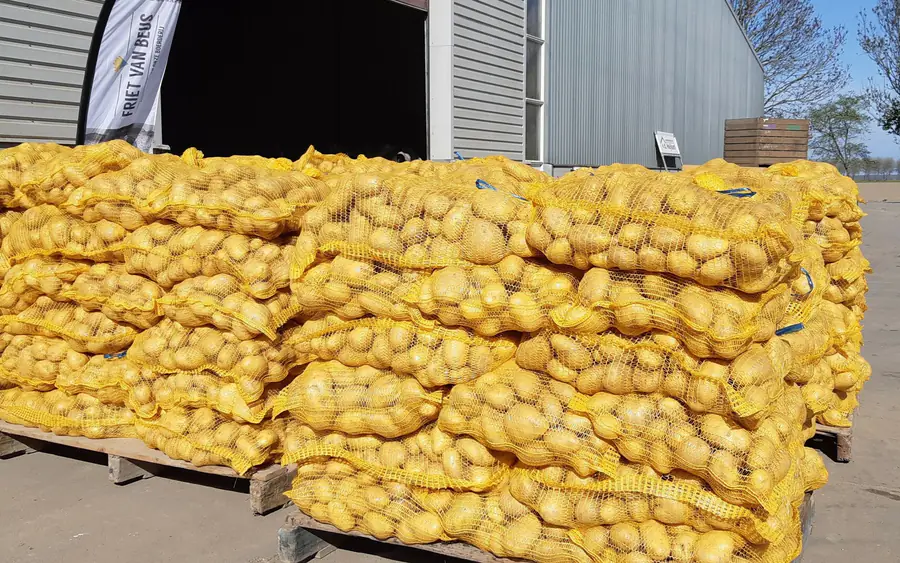
Storing potatoes looks simple: put the sack in a corner and you are done. Yet this is exactly where a lot goes wrong, and you taste it in the chips. After lifting, a potato is still very much alive. It breathes, loses moisture and reacts to light and temperature. As growers we store our own potatoes every season until they go into the cutter, and in this article we share what we have learned. For your kitchen and for the storeroom.
Four words sum it up. Dark, because light turns the tuber green. Cool, because warmth makes the potato sprout and dry out faster. Dry, because moisture on the outside encourages rot and mould. And airy, because a potato breathes and needs to get rid of that warmth and moisture.
For potatoes you are going to boil or fry, the ideal temperature is around 6 to 8 degrees. Colder is not better, and neither is warmer. At room temperature they keep for a limited time, but they sprout sooner and turn soft. Also aim for fairly high humidity without droplets forming on the tubers: air that is too dry makes them shrink and wrinkle, air that is too damp makes them rot.
A fridge or cold room is usually set at 2 to 4 degrees. That sounds safe, but for a potato it is too cold. Below 6 degrees the tuber starts converting starch into sugars. This is called cold sweetening, and it is a natural process in the living potato.
In the pan you barely notice it, in the fryer you certainly do. Sugars brown quickly in hot fat. Chips from a potato stored too cold turn dark and blotchy before the inside is cooked, and taste bittersweet. More acrylamide is formed as well. That is why the European acrylamide rules ask catering businesses to store potatoes above 6 degrees. Read more in acrylamide in chips.
If potatoes have become too cold anyway, you can leave them at room temperature for a while. Part of the sugar is then converted back into starch. This is called reconditioning. It helps, but it does not undo everything. It is better simply to keep them out of the cold room.
Sprouting is the sign that the potato is waking up. Warmth and time are the main drivers. A few small sprouts can be snapped off and the potato is still perfectly usable. If the tuber turns soft and wrinkly with long sprouts, it has put a lot of starch and moisture into them and is no longer suitable for chips.
Greening is caused by light, including fluorescent kitchen lighting or daylight near a window. The green colour itself is chlorophyll and harmless, but at the same time the potato forms solanine, a natural substance that tastes bitter and that you do not want to eat. So cut away green patches and sprouts generously and throw away heavily discoloured tubers. The best protection is simple: keep potatoes in the dark, in a closed crate, a dark room or a sack that blocks out light.
In a snack bar or restaurant kitchen space is tight and it is often warm. For your daily stock, choose a fixed place that is cool and dark, away from the fryer, the oven, the extraction and the window. A ventilated bin or a crate with a cloth over it works well. Do not put sacks straight onto a cold or damp floor, but on a pallet or rack so that air can get underneath.
Take no more out of storage than you need for that day or service. Work first in, first out: the oldest sack is used first. Check the stock regularly and remove soft, wet or rotting tubers straight away. One rotten potato can spoil a whole sack. Keep potatoes away from onions and fruit, which give off moisture and gases that do not help shelf life. And do not use sealed plastic bags, because condensation forms inside them.
If you have a separate storeroom or work with larger quantities, you can take a more professional approach. A room with adjustable temperature around 6 to 8 degrees, good ventilation and no daylight is ideal. A cold room that is also used for meat and dairy is too cold for potatoes. If you only have one cold room, a separate cool and dark space for the potatoes is the better choice.
Stack sacks or crates so that air can flow between them, not tight against the wall. Hang up a thermometer and check it as faithfully as your fridges. Take care when moving stock: if you bring cool potatoes into a warm, humid kitchen all at once, moisture condenses on the tubers. So move smaller quantities and let wet tubers dry before putting them away.
Unwashed potatoes with some soil on them are naturally protected, but in a professional kitchen you do not want sand and clay. Washed potatoes are cleaner and easier to process, provided they have been dried properly and handled gently. Damage during washing is an entry point for decay.
That is why we wash and grade our Agria chipping potatoes every week on the farm, gently and with care. That way they keep for a long time and you get clean, even tubers to cut yourself. That saves costs. You can order them washed or scraped, see peeled potatoes for catering.
Rather not keep potatoes in stock at all? Then we deliver fresh chips, cut on Tuesday and Friday mornings. How to keep them at their best is explained in storing fresh chips. Questions about storage in your own business? Call or message Thijs or Joost, we are happy to help.
Around 6 to 8 degrees, in the dark and with enough ventilation. Colder causes sugar build up, warmer causes sprouting and drying out.
Preferably not. In the fridge potatoes convert starch into sugars. That makes chips dark and bittersweet and increases acrylamide.
If the tuber is still firm and the sprouts are small, snap them off and cut the eyes out generously. If the potato is soft, wrinkly or green, throw it away.
Because of light. At the same time the potato forms solanine, a bitter natural substance. Cut green patches away generously and always store potatoes in the dark.
That depends on the variety, harvest time and how they are stored. Storage varieties such as Agria keep well for a long time in good conditions, early varieties need to be used sooner. Check your stock regularly for soft or sprouting tubers.
Call or message Thijs or Joost, or compose your request in a minute. You will hear from us soon.
Make a request Get in touchCall or message Thijs on +31 6 23972300 or Joost on +31 6 23055742, or send an enquiry straight away. We are happy to think along with you.
Make a request Call Thijs: +31 6 23972300