
Home
About us
Contact
Make a request
What we supply
Knowledge base
Google rating: 5.0 from 14 reviews★★★★★
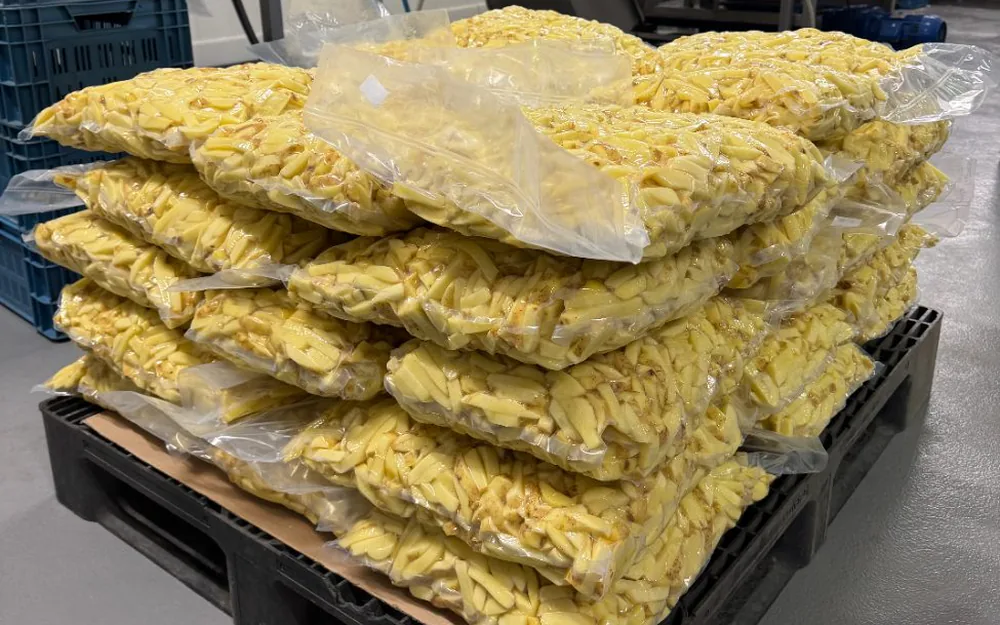
Skin-on chips look traditional, taste of potato and save work in the kitchen. No wonder they are on more and more menus. Yet it is about more than simply leaving the skin on. The skin must be clean and undamaged, the variety has to cooperate and the preparation needs a little more attention. Here you can read what skin-on chips offer, where things can go wrong and how to get them right during a busy service.
Guests see the first benefit straight away: skin-on chips look fresh and honest. The strip of skin shows that the chips come from a real potato rather than a factory bag. Many people also find the flavour fuller and slightly earthier, and the skin adds a firm edge that contrasts nicely with a floury centre.
For the business owner, labour and yield count too. Leave the skin on and there is no peeling or scraping, and no weight lost to peelings. That saves time and raw material, especially at high volumes. In addition, part of the potato's fibre sits in and just under the skin. Do not turn that into a health claim, chips are still chips, but it is an honest point for guests who ask.
A skin hides nothing. Sand, soil or damage that would end up in the peelings bin with peeled chips lands on the plate with skin-on chips. So the potatoes must be thoroughly washed. Green patches must always come out. They form when potatoes are exposed to light and contain solanine, a substance that tastes bitter and is not good for you in larger amounts. Deep eyes, scab marks and cuts from harvesting should also be trimmed away.
In the fryer the skin behaves differently from the flesh. It colours faster and can turn tough and dark if fried too long or too hot. So keep the finishing temperature at no more than 175 degrees and take the chips out of the fat as soon as the flesh is golden. And be honest with yourself: not every guest likes skin. That is why many businesses offer skin-on chips alongside ordinary chips rather than instead of them.
For skin-on chips you want a potato with a thin, light skin and a regular, elongated shape. That lets you cut even sticks with the skin as a narrow edge around them. Inside, just as with ordinary chips, you want a high dry matter content for a floury, dry centre. A watery potato with the skin on turns limp, however good the outside looks.
Agria has a yellow skin and large, long oval tubers, which makes it well suited to skin-on chips. Frieslander, which we use in August, is an early variety that also has a yellow skin. You can read more about the difference between the two under Agria or Frieslander. Whatever you choose, use potatoes that are fresh and firm: an old, wrinkled skin never makes good chips.
Work in a fixed order with skin-on chips. Rinse the potatoes and scrub them where needed, check them one by one for green patches and damage and cut those away. Then cut into sticks, rinse off the loose starch and drain the chips well. The drier the chips go into the fryer, the better the skin colours and the less your fat suffers. A good chip cutter makes the difference between even sticks and a tub full of scraps.
Fry skin-on chips in two stages, just like other fresh chips. First pre-fry or blanch them at a lower temperature until the centre is cooked, then let them cool and finish them just before serving. Keep whole potatoes cool, dark and dry until use, so they do not turn green or sprout. There is more on storage under storing potatoes.
If you want skin-on chips on your menu, we supply the basis: whole potatoes from our own farm in Zeewolde, washed and with the skin on. Our Agria chipping potatoes are gently washed and graded on the farm every week. Gently, because damaged skin is immediately visible on skin-on chips. They keep well for a long time, so you can cut at your own pace.
Cutting them yourself saves you money and you decide the cut entirely. Prefer less work? You can also buy scraped potatoes or our fresh, vacuum-packed chips. More on that under peeled potatoes for catering. Call or message Thijs on 06 23972300 or Joost on 06 23055742 to discuss the options for your business.
No. Skin-on chips are fine, as long as the potatoes are thoroughly washed and you cut away green patches, deep eyes and damage. It saves labour and weight loss.
A potato with a thin, light skin, an elongated shape and a high dry matter content. Agria and Frieslander both work well.
Usually the finishing temperature is too high or the chips fry too long. Finish at no more than 175 degrees and make sure the chips go into the fryer dry. Potatoes with a lot of sugar, for example from storage that is too cold, also colour faster.
The skin contains part of the potato's fibre, but chips remain a fried product. The biggest differences are flavour, appearance and less work.
Yes. We supply whole potatoes washed, so with the skin on, or scraped, grown on our own farm in Zeewolde. To businesses only.
Call or message Thijs or Joost, or compose your request in a minute. You will hear from us soon.
Make a request Get in touchCall or message Thijs on +31 6 23972300 or Joost on +31 6 23055742, or send an enquiry straight away. We are happy to think along with you.
Make a request Call Thijs: +31 6 23972300