
Home
About us
Contact
Make a request
What we supply
Knowledge base
Google rating: 5.0 from 14 reviews★★★★★
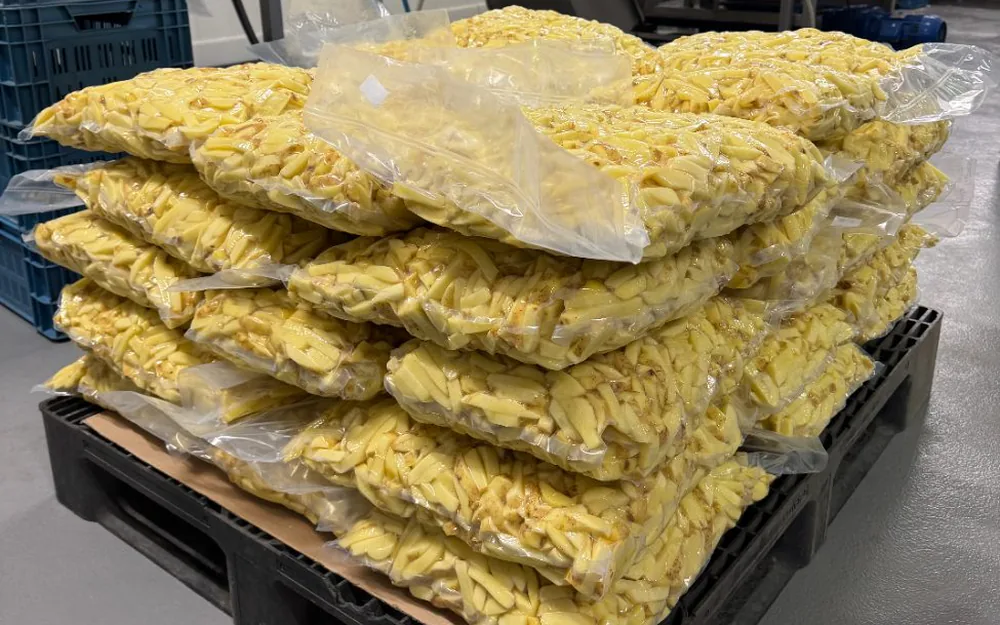
Steakhouse chips are the chips that belong with a piece of meat: thick, sturdy, crisp outside and soft as mash inside. In restaurants, grills and brasseries they sit next to the steak, the ribs or the stew. It sounds simple, just cut them thicker, but do that without adapting the method and you get chips that turn too dark outside and stay raw inside. Here is how to make steakhouse chips that are right every time.
The difference is mainly thickness. Ordinary chips are often around twelve millimetres, while steakhouse chips go well beyond that, towards one and a half centimetres or more. Sometimes the skin stays on, sometimes not. That thickness changes the balance: there is relatively less crust and much more centre. So the centre has to be good, floury and dry, with the taste of the potato.
Steakhouse chips are also about presentation. Long, even sticks on a plate or in a small dish look generous and suit a restaurant dish. Thanks to their thickness they also stay warm longer than thin chips, which helps when a plate waits on the pass for a moment before going out.
For long, thick sticks you need large, elongated tubers. Small or round potatoes give short stubs and a lot of cutting waste. Dry matter content matters too. A potato with plenty of dry matter turns floury and light inside, while a watery potato turns glassy and collapses. Low sugar is the third requirement: thick chips stay in the fat longer, so a potato that colours quickly will darken before it is cooked.
For those reasons Agria is a widely used variety for thick chips. It has large, long oval tubers with deep yellow flesh and plenty of dry matter. From September to July we cut our chips from Agria potatoes from our own fields. How thick to cut exactly, and what that does to frying time and yield, is covered under chip thickness and cut.
The thicker the chip, the longer the heat needs to reach the core. So pre-fry steakhouse chips at a lower temperature than you are used to for ordinary chips, and give them plenty of time. The aim of the pre-fry, also called blanching chips, is a cooked centre without colour on the outside. Break a stick open: it should be soft right to the middle and not yet brown.
Then let the chips steam off and cool. During that rest the moisture moves outwards and a dry outer layer forms, the basis for a crisp crust. Only finish them just before serving, at no more than 175 degrees, until golden and crisp. The principle is the same as frying chips twice, just with a longer first stage.
In a restaurant everything revolves around service. So blanch in portions before opening, let the chips cool and keep them covered and chilled. During service you finish each order as it comes in. That way the chips are crisp on the plate within minutes and the work at the fryer stays manageable, even when every table orders at once.
Watch the amount per basket. Thick chips cool the fat considerably, so an overfilled basket means a long recovery time and greasy chips. Salt straight after draining so the salt sticks, and serve on a warm plate or in a pre-heated dish. How we supply chip shops and snack bars is explained under fresh chips for snack bars.
If you want your own, extra thick cut, you can buy whole potatoes and cut them yourself with a sturdy chip cutter fitted with a coarse blade. We supply Agria washed or scraped, gently washed and graded on the farm every week. Cutting them yourself saves money and gives you complete freedom over thickness and shape.
Prefer less work in the kitchen? Our fresh chips are cut from our own potatoes on Tuesday and Friday mornings, vacuum-packed, with no additives and not pre-fried, and then delivered by our regular drivers. We are happy to think along about the cut that suits your dishes. Call or message Thijs on 06 23972300 or Joost on 06 23055742, or send a request.
There is no fixed size, but steakhouse chips are clearly thicker than ordinary chips, which are often around twelve millimetres. Many kitchens cut towards one and a half centimetres or thicker.
A large, elongated variety with plenty of dry matter and little sugar. Agria is a good choice, because it gives long sticks and turns floury inside.
Pre-fry longer at a lower temperature until the core is soft. Only then finish briefly at no more than 175 degrees for colour and crispness.
Yes, in restaurants that is standard practice. Blanch before service, let them cool and keep them covered and chilled. During service you finish each order.
They can, but they do not have to. With skin they look more rustic, without skin more refined. Choose what suits your dishes and your guests.
Call or message Thijs or Joost, or compose your request in a minute. You will hear from us soon.
Make a request Get in touchCall or message Thijs on +31 6 23972300 or Joost on +31 6 23055742, or send an enquiry straight away. We are happy to think along with you.
Make a request Call Thijs: +31 6 23972300