
Home
About us
Contact
Make a request
What we supply
Knowledge base
Google rating: 5.0 from 14 reviews★★★★★
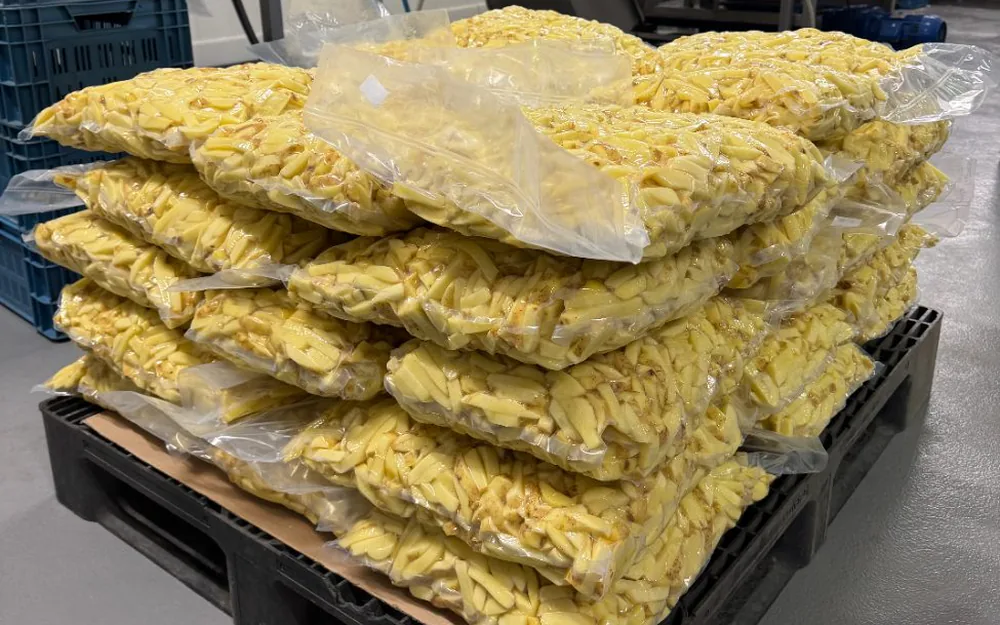
Every year lists of the best chips in the Netherlands appear, and every guest has their own favourite. We do not take part in rankings. What sets the tastiest chips apart from an ordinary portion is no secret, and it is not luck either. It is a chain of choices, from the potato in the field to the moment the tray goes over the counter. Get every link right and you will serve chips in your own business that people come back for.
A chipping potato needs plenty of dry matter and few sugars. Dry matter gives a crisp crust and a centre that is fluffy rather than watery. Few sugars mean the chips colour a nice golden yellow instead of dark brown and bitter. Which varieties meet those requirements is explained in which potato to use for chips.
Freshness matters at least as much. Chips cut from a whole potato shortly before frying have a full potato flavour that a pre-fried frozen product struggles to match. The trade-offs between the two are covered in fresh or frozen chips.
An even cut is the basis of an even portion. If the thickness varies, the thin chips are already brown while the thick ones are not yet cooked. Which thickness suits your business and what it does to frying time and bite is covered in our piece on chip thickness and cut.
What is often forgotten: dry the chips well before they go into the oil. Water on the surface makes the oil spit, cools the fat and makes the crust less crisp. A few minutes draining in a basket or a quick pat dry makes a visible difference during busy service.
Good chips are fried in good oil. The type of fat partly determines the flavour, and the condition of the fat determines whether that flavour stays fresh. Old fat gives an off-taste and dull, greasy chips. Which fat suits your business is covered under the best frying fat.
Fresh chips are fried in two stages: first blanched at a lower temperature so the centre cooks through, then finished to a golden, crisp crust. Why that works is explained in frying chips twice. Do not put too many chips in the basket at once, because the oil temperature drops and the chips soak up fat. Fry to golden yellow and no further: it tastes better and is better for you.
Salt the chips straight after they come out of the oil and have been shaken. At that point there is still a thin film of oil on the surface and the salt sticks. Wait too long and the salt drops to the bottom of the tray. Then toss the chips lightly so every chip gets some.
Serve immediately, and in packaging that lets steam escape. A closed container turns the tastiest chips soggy within minutes. The same goes for sauce: a good sauce belongs with chips, but the chips should not drown in it. If you want fresh chips from home-grown potatoes as the basis for your best portion, call or message Thijs on 06 23972300.
A variety with plenty of dry matter and few sugars, such as Agria. We supply Agria from September to July and Frieslander for just a few weeks in August.
Usually because the oil is too cool, there are too many chips in the basket at once, the chips are wet or the packaging is closed so steam cannot escape.
Straight after frying and shaking, while there is still a thin film of oil on them. That is when the salt sticks to the chips.
We do not name names. The best chips come from places where every link is right: a good potato, freshly cut, fried in clean fat at the right temperature and served straight away.
Call or message Thijs or Joost, or compose your request in a minute. You will hear from us soon.
Make a request Get in touchCall or message Thijs on +31 6 23972300 or Joost on +31 6 23055742, or send an enquiry straight away. We are happy to think along with you.
Make a request Call Thijs: +31 6 23972300