
Home
About us
Contact
Make a request
What we supply
Knowledge base
Google rating: 5.0 from 14 reviews★★★★★
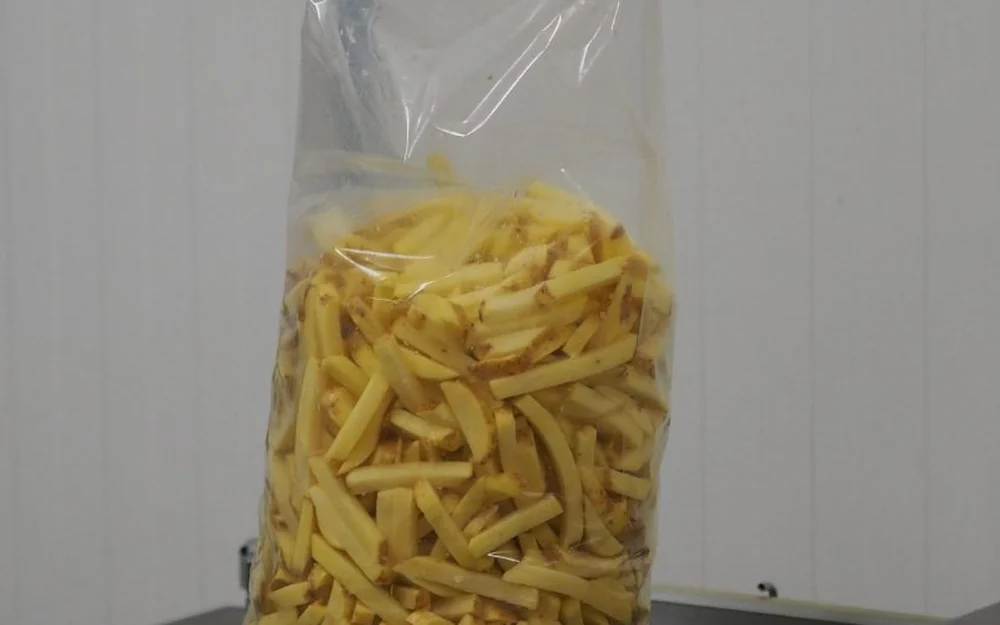
Belgian fries have a reputation few dishes can match. In Belgium they are called frieten, you buy them at the frituur or frietkot, the local chip shop, and everyone has an opinion about them. In the Netherlands, too, fresh Flemish-style chips have become a concept of their own, with businesses built entirely around them. So what makes Belgian fries so good? It is not a secret recipe, but a combination of fresh potatoes, the right thickness and a method refined by generations of Belgian chip fryers.
In Belgium the frituur is an institution. Almost every village has one, often a simple stall or a shop on the square, and chips are eaten there as a meal, not just as a side. The fries go into a paper cone or tray, with a wide choice of sauces. Belgians are proud of their frites and take the preparation seriously. In many chip shops the fries are still cut fresh from whole potatoes.
That culture has influenced the rest of Europe. Anyone in the Netherlands who opens a business with Flemish fries on the sign is promising something specific: thicker, freshly cut chips that have been fried twice and have a firm bite. Living up to that promise starts with the product and with the way you work in the kitchen.
The best-known feature of Belgian fries is that they go into the fat twice. The first time they fry at a lower temperature, so the inside becomes cooked and soft without the outside colouring. Then the fries rest for a while. Just before serving comes the second round at a higher temperature, up to 175 degrees, in which the crust turns crisp and golden.
The rest between the two fries is not wasted time. The fries steam off, the outside dries and the starch sets, so the second round gives a much crisper crust. In a busy shop it also has a practical advantage: you pre-fry during quiet moments and only finish during the rush. The details are in frying chips twice.
Belgian fries are usually cut thicker than classic Dutch patat of about 12 millimetres. That gives a soft, almost creamy centre with a crisp layer of fried potato around it. How thickness affects flavour and frying time is covered under chip thickness and cut.
The traditional Belgian chipping potato is Bintje, a floury variety that has been linked to the Belgian chip shop for over a century. Today chip shops also use other floury varieties with plenty of dry matter, such as Agria. For fat, beef dripping, known locally as ossewit or blanc de boeuf, was long the Belgian standard. It gives a full flavour, although many chip shops now also fry in vegetable fat. The trade-offs are set out under beef dripping or vegetable frying fat.
The biggest difference lies not in the potato but in habit. In many Dutch snack bars, pre-fried frozen chips are the norm: cut in a factory, pre-fried and frozen, and only finished in the shop. Those chips are often thinner and very uniform. In Belgium, cutting fresh and frying twice on site is still the custom in many chip shops.
There are differences in naming and fat too. North of the big rivers many Dutch people say patat, while in the south and in Belgium it is friet or frieten. In the Netherlands chips are usually fried in solid vegetable fat, whereas beef dripping is traditional in Belgium. But the line is blurring: Dutch businesses also choose fresh chips the Flemish way, because guests taste the difference and gladly come back for it.
If you want genuine fresh Flemish-style chips on your menu, you need a potato suited to the job and chips that have not been pre-fried, so you can apply the Belgian method yourself. That is exactly what we supply: fresh chips cut from our own Agria, and for a few weeks in August from Frieslander. No additives, not pre-fried and vacuum-packed. You blanch and finish them the way you want.
We cut on Tuesday and Friday mornings and our regular drivers then deliver throughout the central Netherlands, from Almere and Harderwijk to the Amsterdam area and Apeldoorn. Delivery to Belgium is difficult for us because of the long delivery times. What makes fresh fries from our own crop different is explained on our page about fresh fries. For questions about frying and fat, call or message Thijs on 06 23972300 or Joost on 06 23055742.
Because of the combination of freshly cut floury potatoes, a slightly thicker cut and frying twice. That makes the inside soft and the crust extra crisp.
First pre-fry at a lower temperature until cooked, then let them rest and steam off, and just before serving finish at no more than 175 degrees until golden and crisp.
Belgian fries are more often freshly cut, a little thicker and traditionally fried in beef dripping. In the Netherlands, pre-fried frozen chips in vegetable fat are more common, although businesses there also choose fresh chips.
In practice, yes. In the Netherlands Flemish fries is often used as the name for chips made the Belgian way: fresh, cut thicker and fried twice.
We do deliver washed potatoes to Belgium, but please allow for longer delivery times. We deliver fresh chips throughout the central Netherlands, and whole potatoes can be delivered nationwide.
Call or message Thijs or Joost, or compose your request in a minute. You will hear from us soon.
Make a request Get in touchCall or message Thijs on +31 6 23972300 or Joost on +31 6 23055742, or send an enquiry straight away. We are happy to think along with you.
Make a request Call Thijs: +31 6 23972300